UEFI loader
A small PE32+ EFI application that sets up the GOP framebuffer, loads the PIE kernel, relocates it and hands over the memory map.
An operating system written from scratch, from the boot loader to the glass.
Version 1.0 “Lagoon” · x86_64 · UEFI · Experimental
VoluSys doesn’t build on Linux, BSD or anyone else’s kernel. The UEFI loader, the preemptive kernel, the drivers, the window server and its glass, the network stack, the TLS library and the web browser were all written for this project.
About 67,000 lines of C and assembly, with no third-party code libraries. The only borrowed pieces are data: Mozilla’s CA root list and the DejaVu fonts.
A small PE32+ EFI application that sets up the GOP framebuffer, loads the PIE kernel, relocates it and hands over the memory map.
Physical and virtual memory managers, a heap, a preemptive multi-core (SMP) scheduler with mutexes, PCI enumeration, an RTC wall clock with time zones, and a virtual file system with persistent storage on FAT disks.
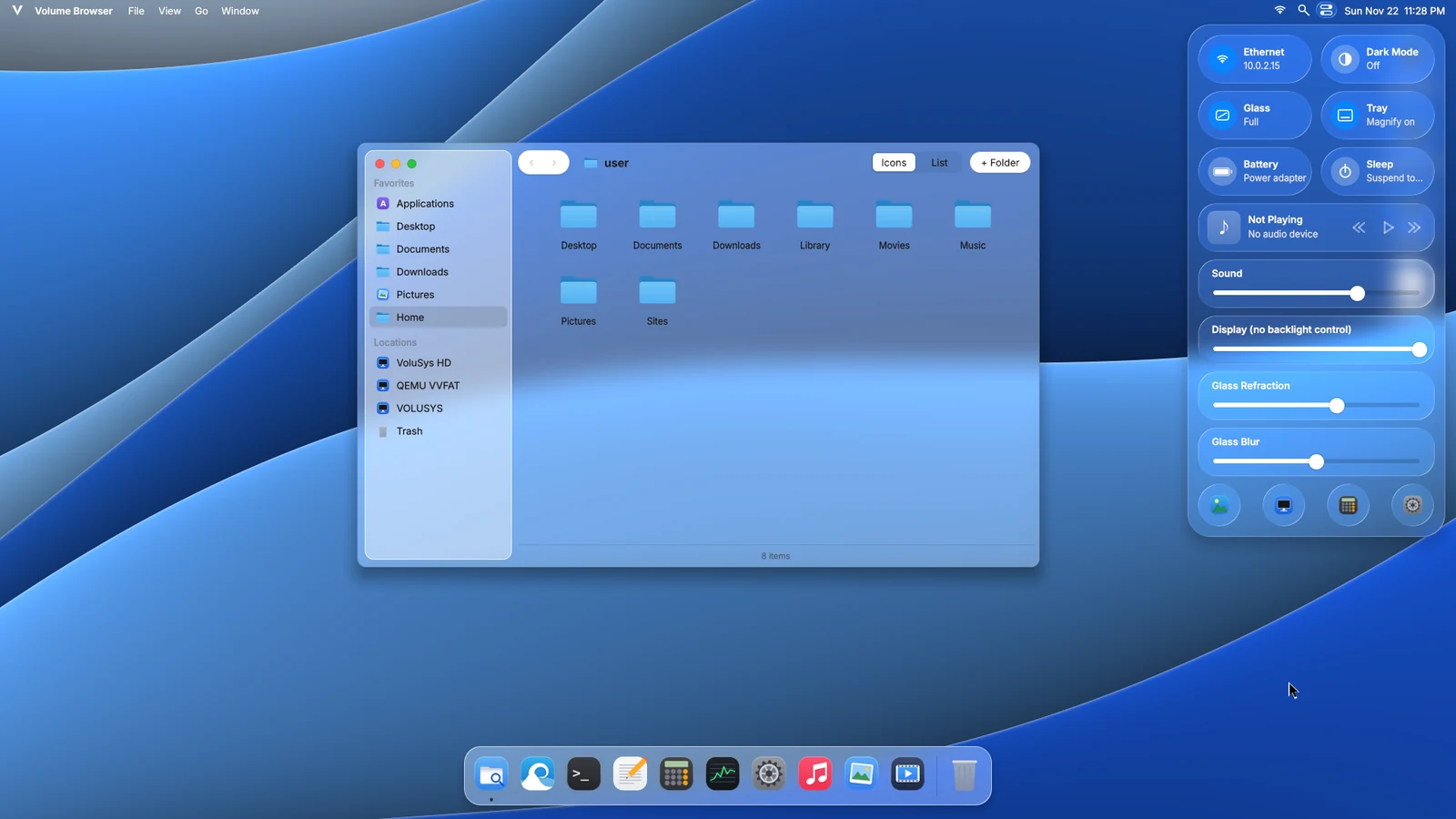
A software compositor that renders every window, the Tray, menus and Helm in Volu Glass, with blur, edge refraction, dispersion and a specular rim.
An e1000 driver, ARP, IPv4, ICMP, UDP, DHCP, DNS and TCP. TLS 1.3 falls back to 1.2, with X25519, P-256, AES-GCM, ChaCha20-Poly1305, OCSP stapling and certificate chain validation.
Its own HTML parser, CSS cascade, block/inline/flex/grid layout, painting, forms and cookies, plus Surf, its own bytecode JavaScript engine with a garbage collector and ES2020 built-ins.
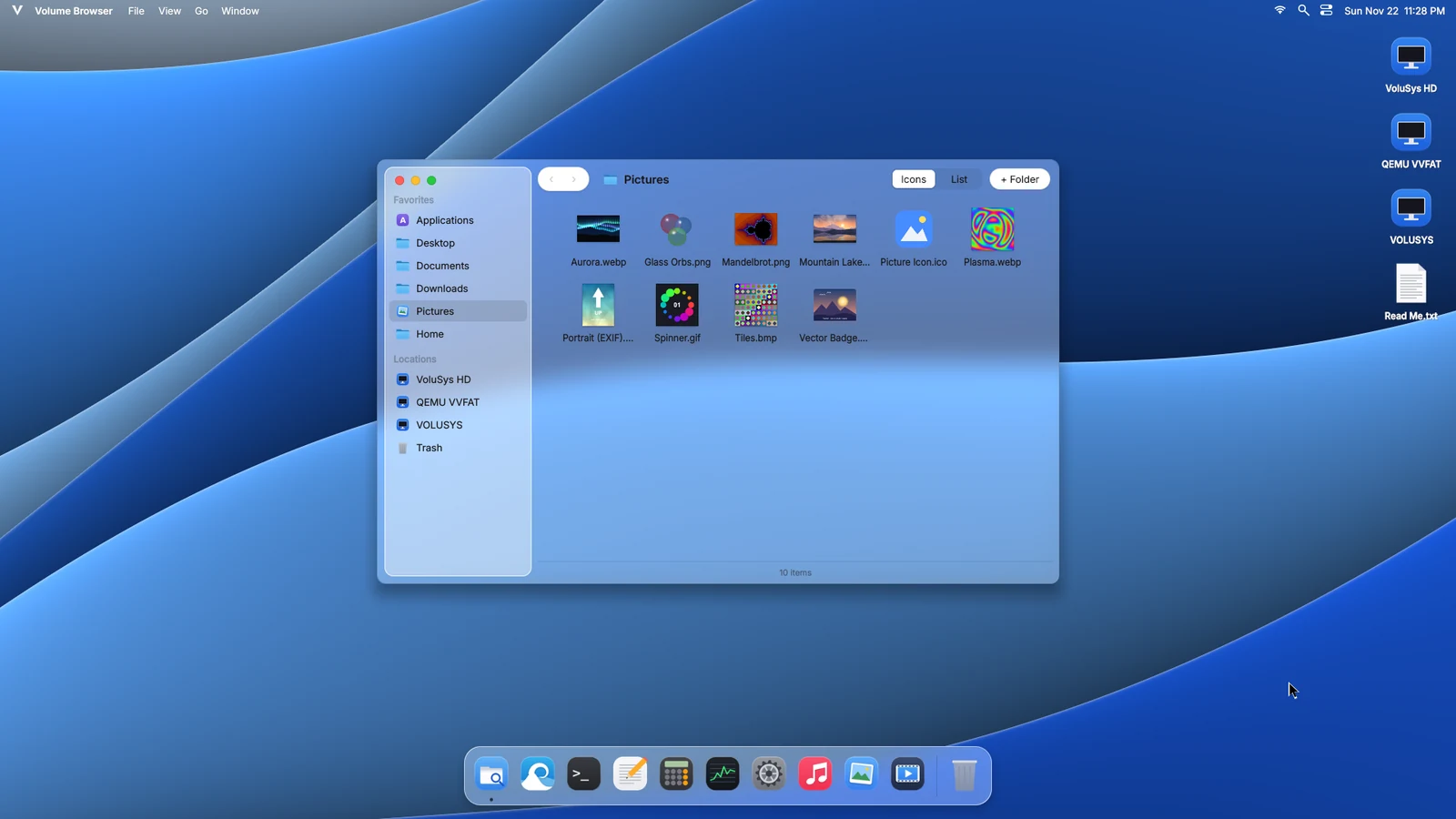
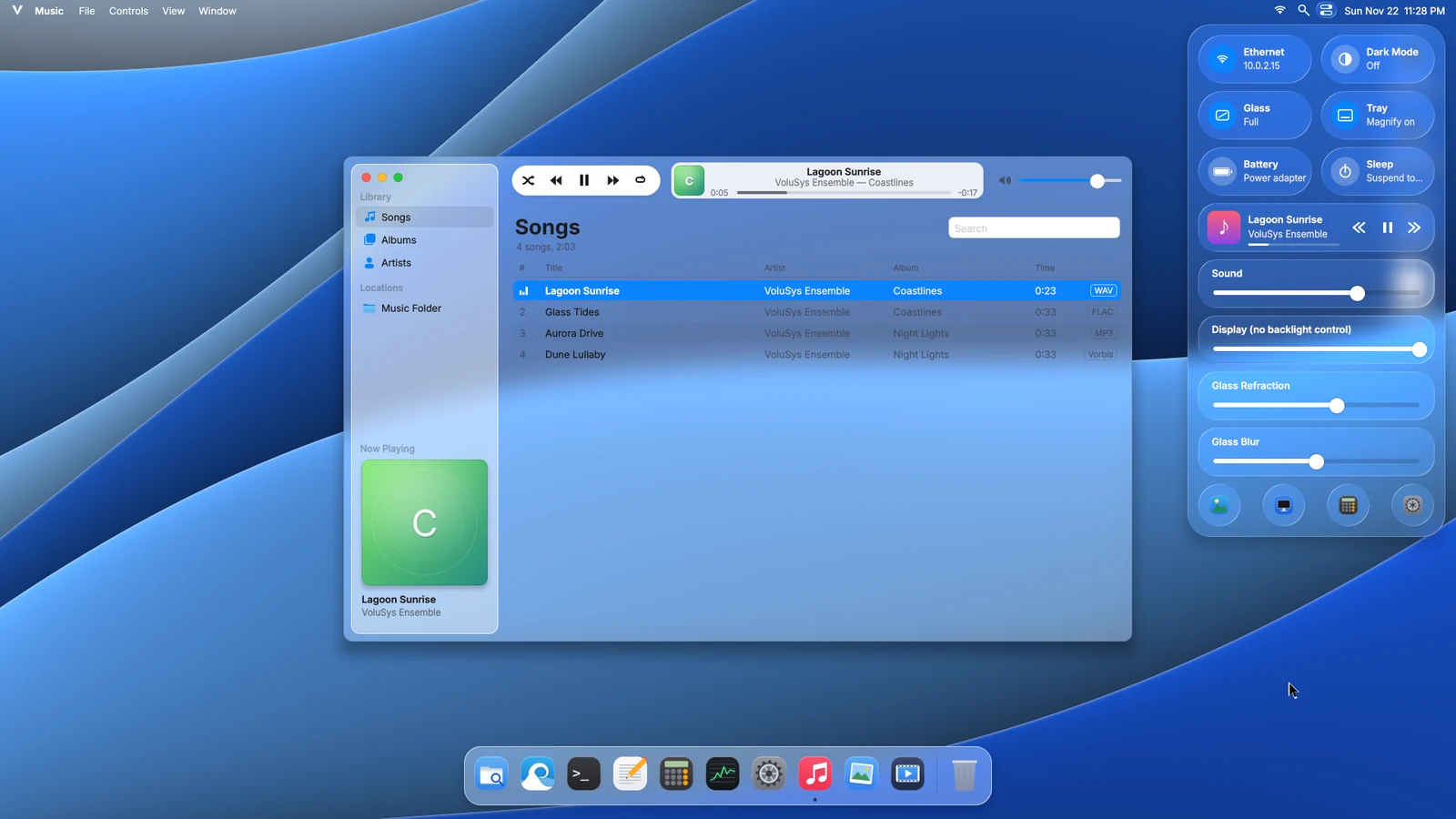
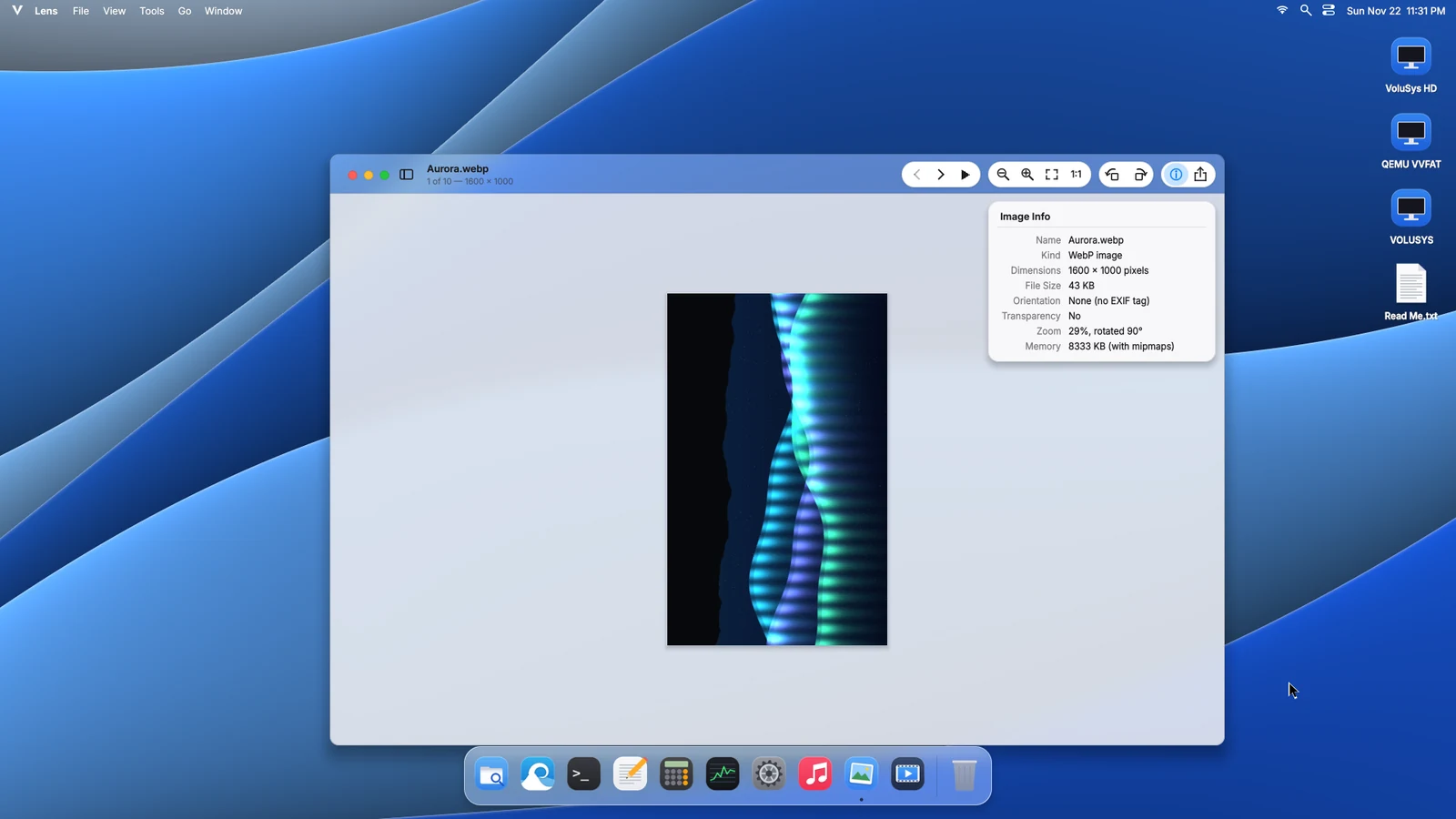
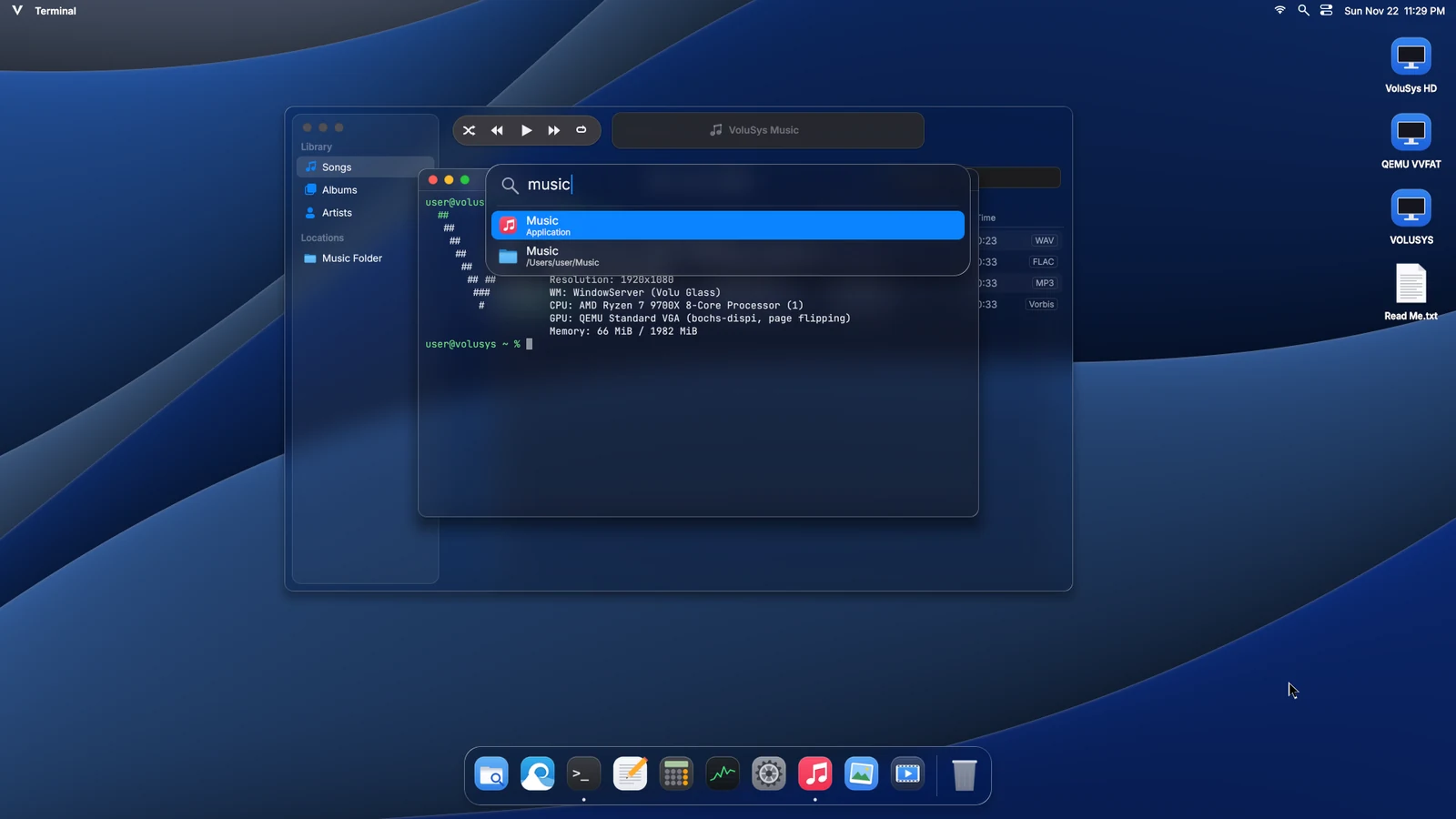
Decoders for PNG/APNG, JPEG, GIF, WebP, BMP and ICO images, an SVG renderer, and WAV, FLAC, MP3 and Vorbis audio, all mixed by the kernel’s audio engine.
USB and PS/2 input; AHCI, NVMe and USB storage; Intel and Realtek network cards; Intel, AMD, NVIDIA and virtual GPUs; ACPI power and batteries; five kinds of audio hardware.
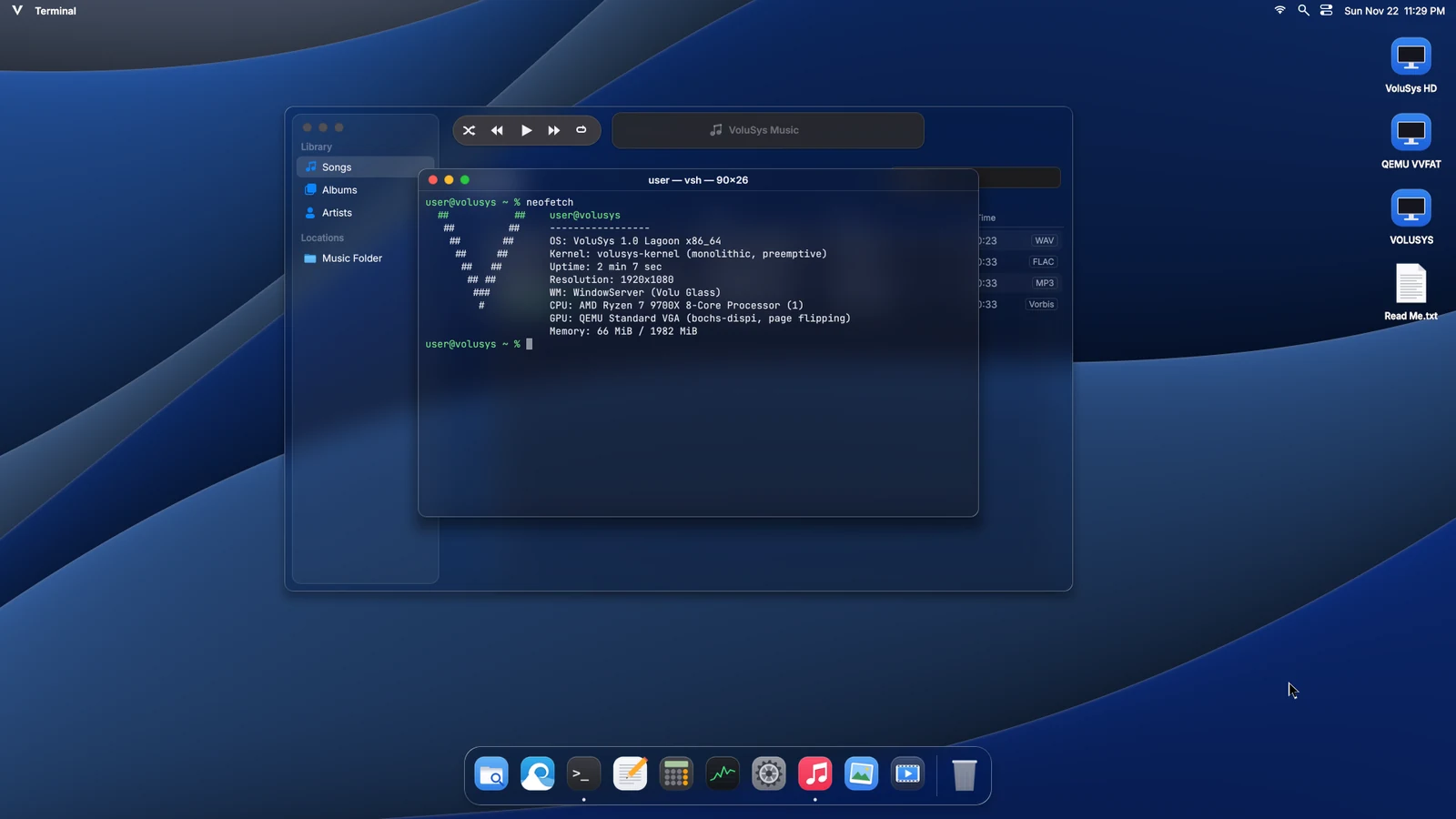
Volume Browser with quick previews, Settings, Terminal, Quill, Calculator, System Monitor, Music, Lens, Lighthouse search, Helm and a magnifying Tray, in light and dark appearances with eight accent colours.
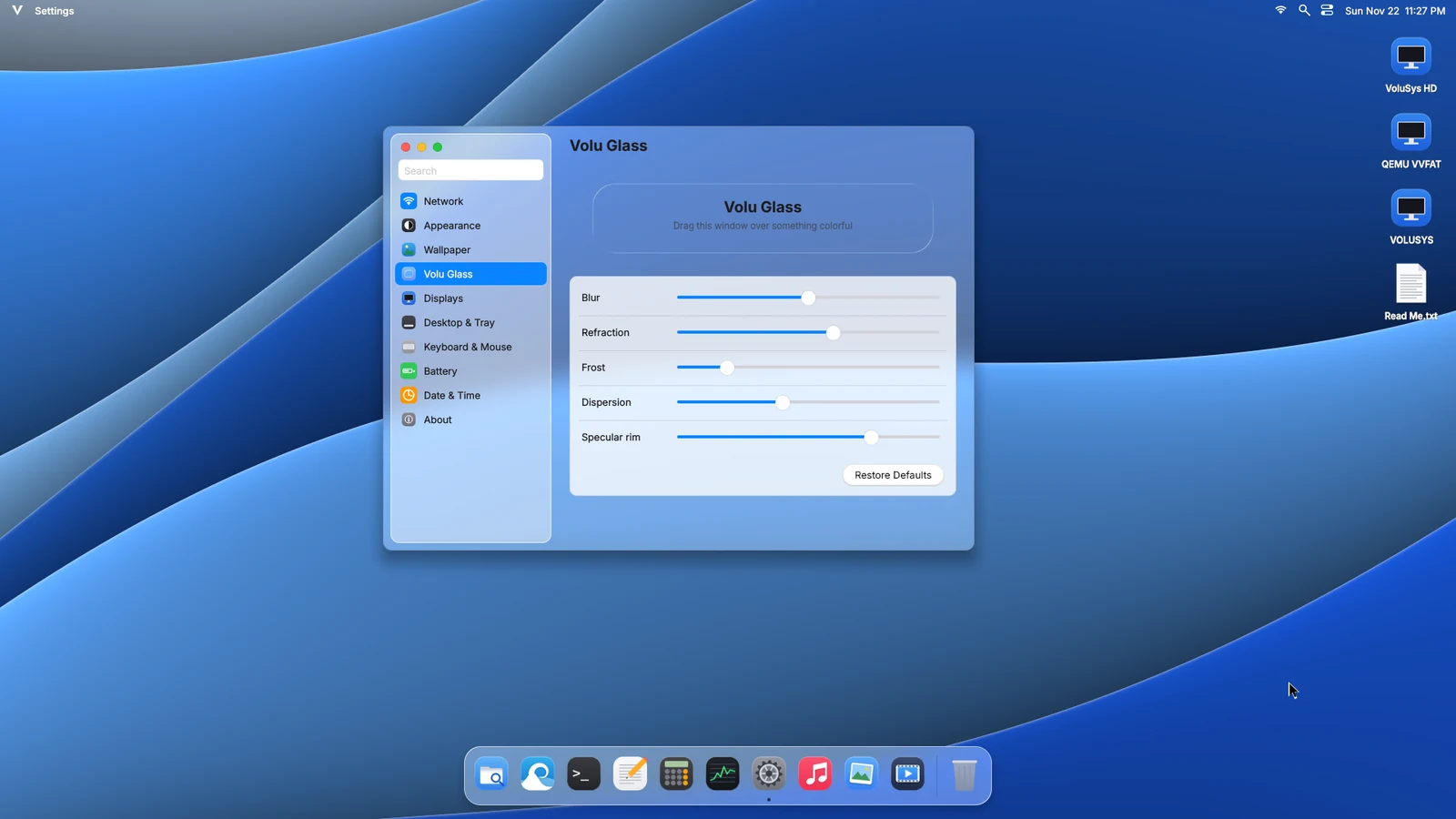
The window server samples what is behind each surface, curves it through a rounded glass edge, splits colour slightly at the rim, frosts it, and adds a hairline highlight where the light catches it. Try the same controls VoluSys has in Settings.
Every app is drawn with the same toolkit and materials, so sidebars, toolbars and controls match everywhere, in light or dark.
 Tide
Tide renders the real web with an engine written for VoluSys: HTML, CSS, layout, JavaScript, images, SVG, cookies, TLS, and the security model that holds them together (CSP, SRI, CORS and storage isolation).
Meet Tide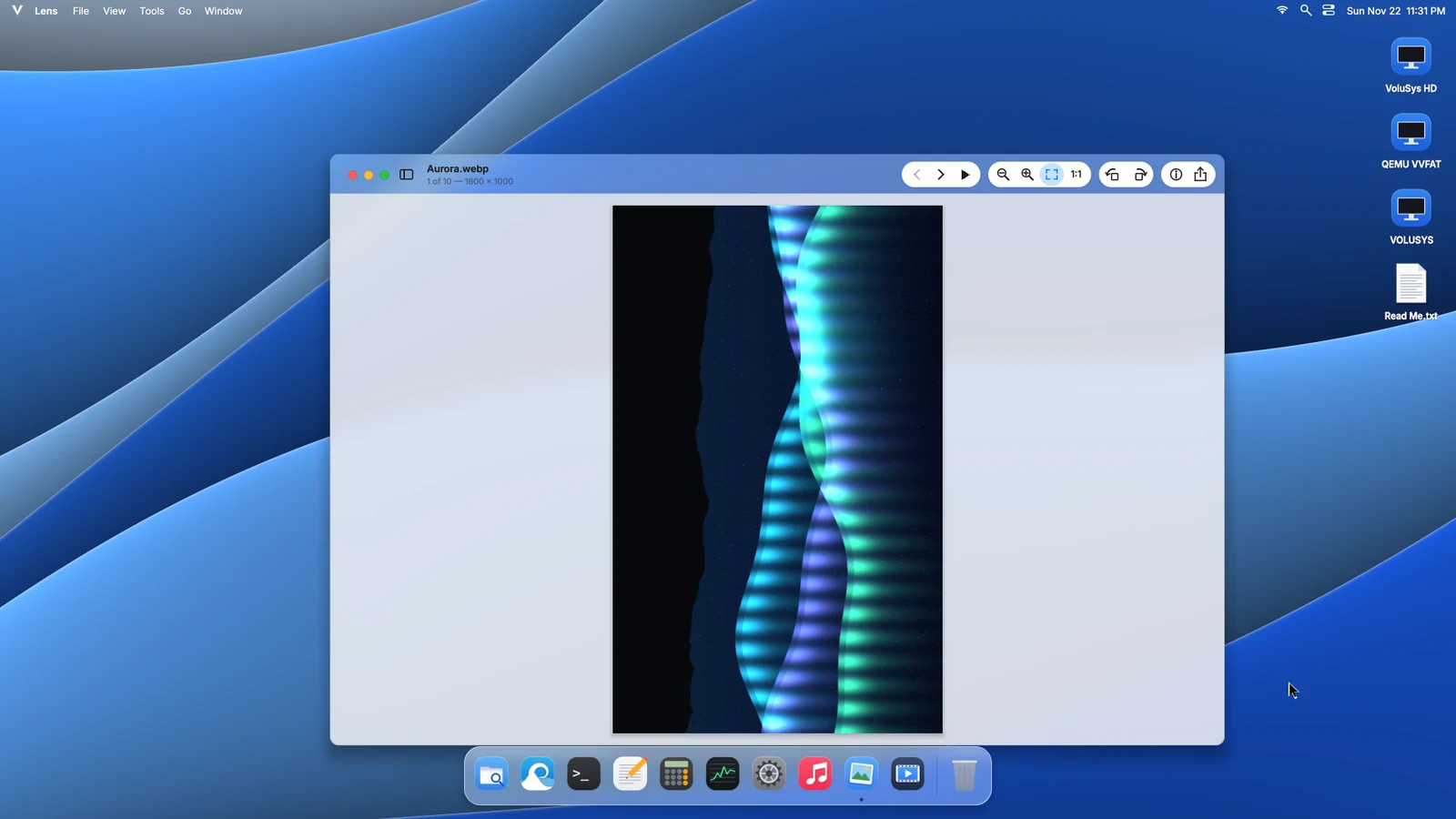
Features planned as part of the system itself, not separate downloads. Each one links to its card on the roadmap.
 CipherAn encrypted secure folderCipher is a secure folder built into VoluSys: a separate encrypted volume that unlocks with your passphrase (biometrics and the TPM come later) and stays out of search, recent files and the file browser while it’s locked.VoluSys 3.0 “Atoll”
 NotebookMarkdown notes and desktop sticky notesNotebook is the notes app built into VoluSys: Markdown with live preview, tags, search and plain .md files.VoluSys 4.0 “Fjord”
 GaugeSystem stats widgetsGauge is a set of glass desktop widgets built into VoluSys that show CPU, memory, network and audio levels, with a compact menu bar mode.VoluSys 4.0 “Fjord”
 HourglassFocus timer, timers, stopwatch and alarmsHourglass is the clock-and-timer app built into VoluSys: focus sessions with breaks, plus the system timers, stopwatch and alarms.VoluSys 4.0 “Fjord”
 World ClockAnimated clocks for several citiesWorld Clock is built into VoluSys: clocks for the cities you care about, with smooth per-second animation.VoluSys 4.0 “Fjord”
 FrameA photo-frame widget for your desktopFrame is built into VoluSys: it turns your desktop into a photo frame that rotates through an album or your Pictures folder.VoluSys 4.0 “Fjord”
These numbers come from the repository and a real boot log, not from benchmarks we tuned.
After the 1.x “Lagoon” updates, 2.0 “Reef” brings protected processes and browser extensions, 3.0 “Atoll” a hardened kernel and Secure Boot, 4.0 “Fjord” the SDK and Harbor, and 5.0 “Pacific” Linux compatibility and Tide on other operating systems.
See the roadmapBuild from source and run it in QEMU with UEFI firmware, or copy it to a FAT32 USB stick and boot a real PC. It is experimental, so read the notes first.